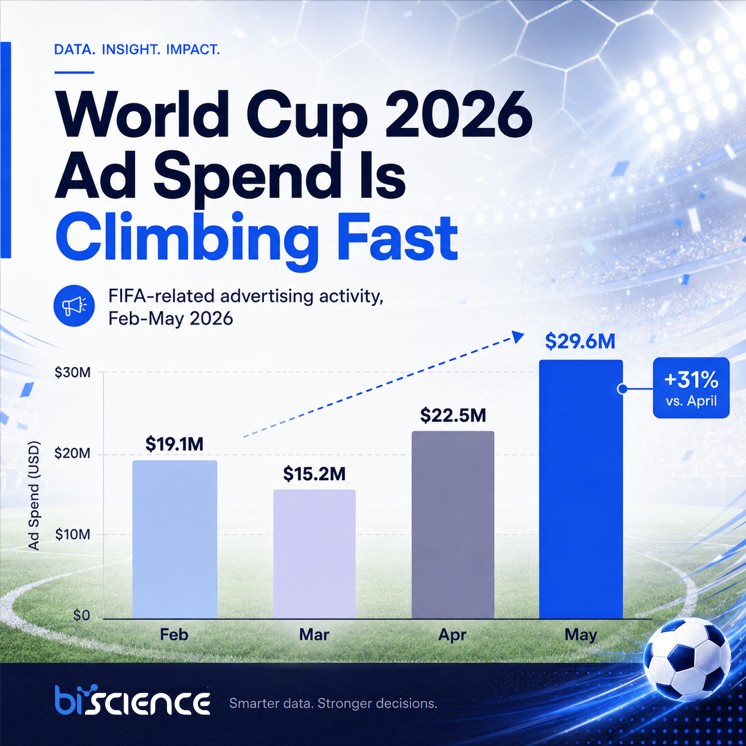
The World Cup advertising build-up is already well underway, and the data shows that brands are not waiting for the first match to begin competing for attention. According to AdClarity by BIScience data, FIFA-related ad spend reached $29.6M in May, up from $22.5M in April and $15.2M in March.
It is clear that advertisers are treating World Cup 2026 as a long runway, not a short event window. They are using the months before the tournament to build awareness, test messaging, shape demand, and secure audience mindshare before the media environment becomes even more crowded. For marketers, the message is simple: if you wait until the tournament itself, you may already be late.
The leading brands in terms of spend were Coca-Cola, Adidas, Verizon, MeWatch, Bank of America, Polymarket, Banco Macro, Panini, ESPN, Motorola, Discover Atlanta, Don Julio, FIFA, and Discover Los Angeles.
Video Is Leading the Early Media Mix
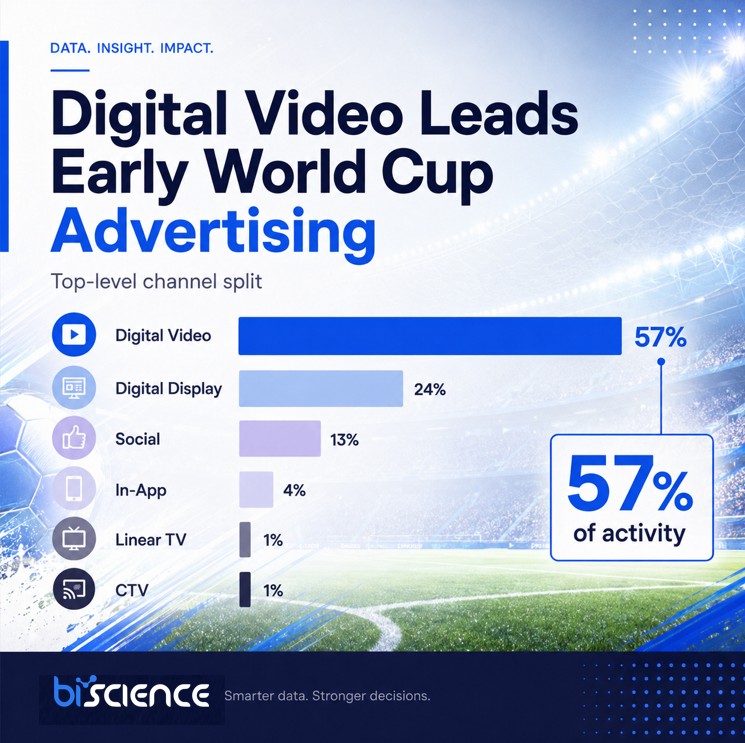
The first place to look is the channel mix. AdClarity data shows that Digital Video accounts for 57% of FIFA-related advertising activity, far ahead of Display at 24% and Social at 13%. In the early phase of a global sports event, video is clearly the center of gravity.
That makes strategic sense. World Cup campaigns need emotional storytelling, visual impact, and high attention at scale. Video gives brands the space to connect with fandom, national identity, player stories, and the excitement around the tournament. Display and Social still play important supporting roles, but the early signal is clear: when the media moment is global, visual, and emotionally charged, video becomes the lead channel.
Beverages Moved First, but the Market Is Expanding
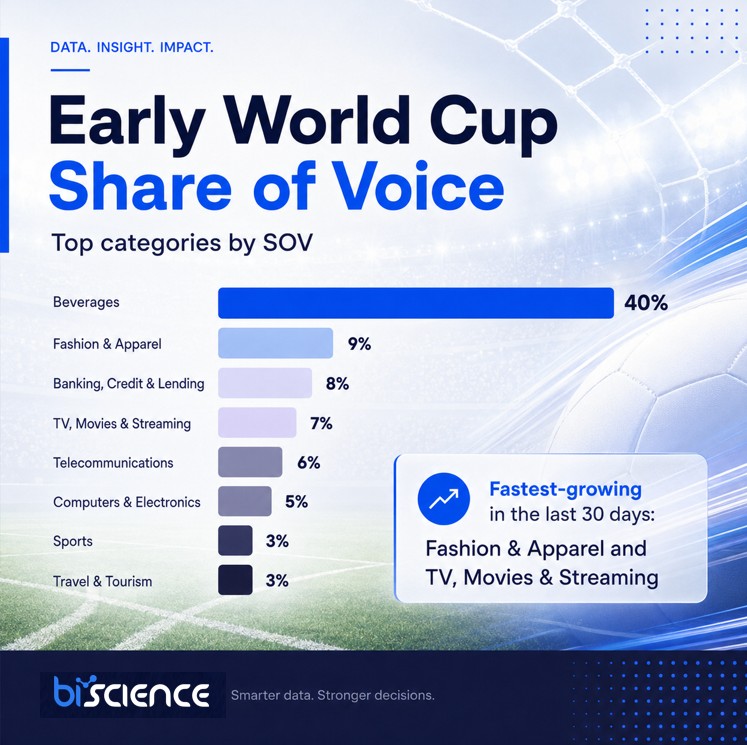
Category data shows one early leader: Beverages, with 40% share of voice in FIFA-related advertising. That is not surprising. Beverage brands naturally align with global sports moments, where celebration, group viewing, fandom, and mass reach all matter.
The more interesting signal is what is happening next. In the last 30 days, the fastest-growing categories have been Fashion and Apparel and TV, Movies and Streaming. That suggests the opportunity is already broadening beyond the earliest, most obvious sports-event advertisers. Major event advertising often follows this pattern: high-fit categories move first, then adjacent sectors scale as audience attention rises. The result is a more competitive landscape and a wider set of brands fighting for the same consumer moments.
Early Campaigns Are Already Performance-Led
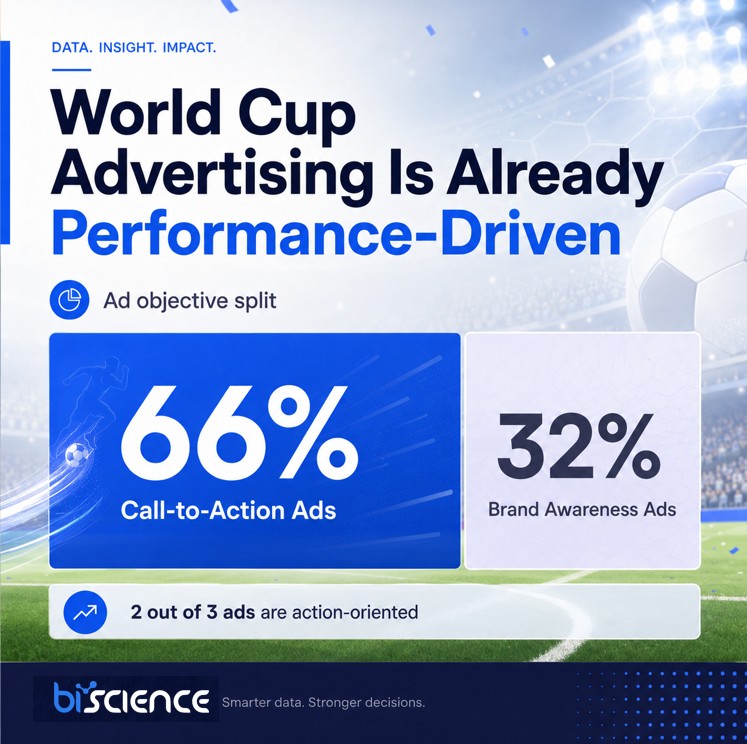
The objective mix adds another important layer. Early World Cup 2026 advertising is already performance-led, with 66% of ads focused on call-to-action compared with 32% focused on brand awareness. That means advertisers are not treating the tournament build-up as a passive branding phase.
Instead, brands are already using World Cup-related activity to drive action, whether that means participation, conversion, sign-ups, app engagement, retail traffic, or deeper audience interaction. This reflects a broader shift in sports marketing. Major events are still powerful brand platforms, but they are also becoming measurable performance opportunities.
What Marketers Should Watch Next
The World Cup 2026 media window has already opened. Spend is rising, video is leading, Beverages are setting the early pace, and performance objectives are shaping campaign strategy before the tournament begins.
For marketers, the key question is not only whether to participate. It is how early to move, which channels to prioritize, which categories are accelerating, and how competitors are turning attention into action. With AdClarity, teams can track these shifts across spend, share of voice, channels, audiences, categories, and creative activity, giving them the competitive context they need before the market becomes even louder.