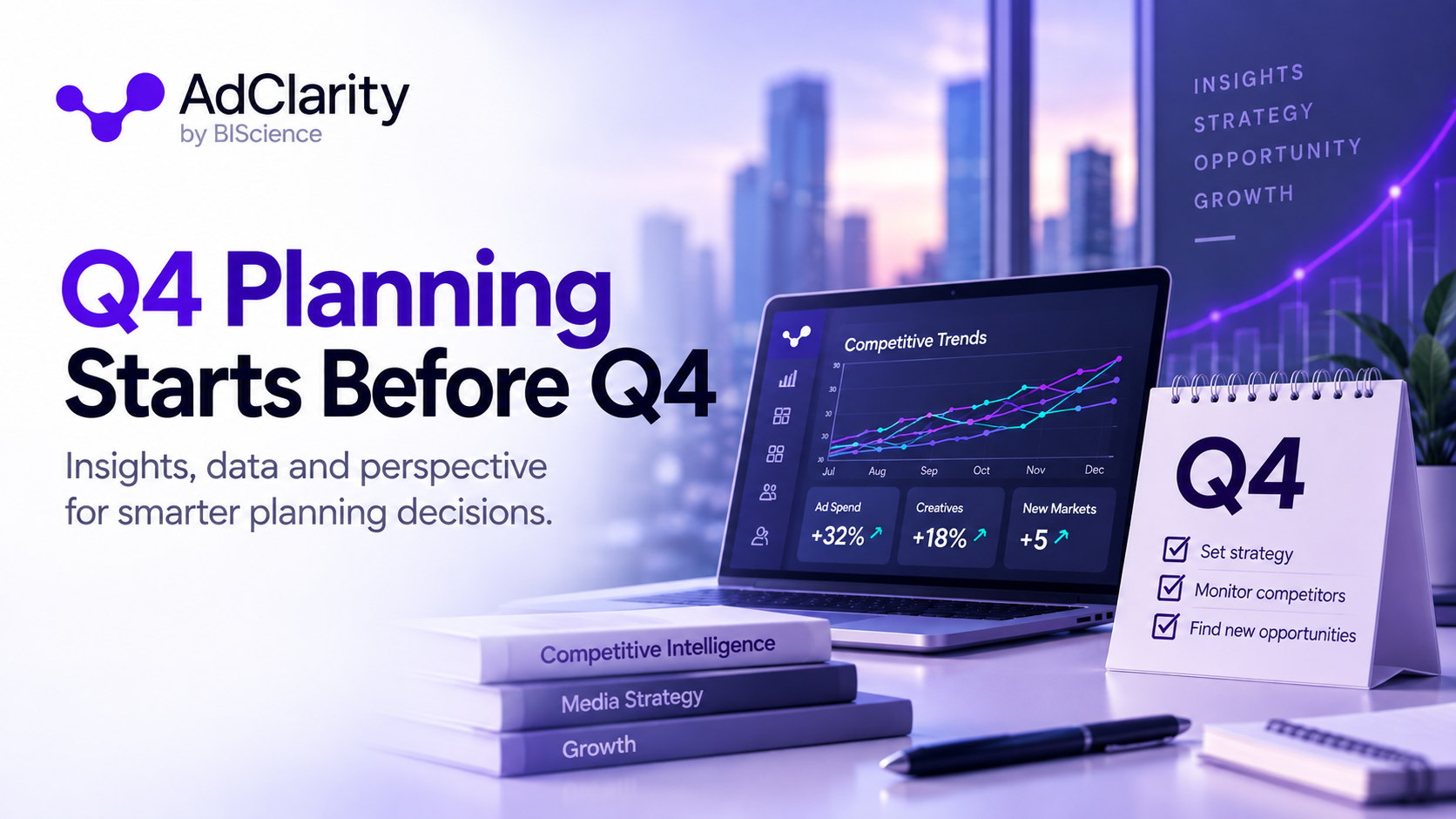
Q4 is often treated as the final performance push of the year. For marketers, it is also the point when short-term execution and next-year planning collide.
Tentpole events, holiday demand, and year-end budget pressure arrive as brands and agencies decide where to invest in 2027. To support this planning window, AdClarity also has two limited-time Q4 promotions, outlined below.
One Planning Window, Two Different Decisions
The first challenge is immediate: how should the business compete through Q4? That requires understanding who is gaining momentum, where budgets are moving, what creative is scaling, and which channels are carrying more weight.
The second challenge is longer term. Teams need evidence to defend or change 2027 budgets. A competitor increasing CTV investment, accelerating social activity, or concentrating spend in specific DMAs may signal a broader strategic shift rather than a temporary Q4 move.
Strong planning therefore looks beyond owned campaign performance. Competitive evidence adds the outside-in context needed to understand broader category movement.
Look Back Before You Look Forward
A single Q4 snapshot can be misleading. Looking across the previous 12 months can reveal which competitors gained or lost momentum, whether channel shifts are sustained, and how activity changes around major seasonal periods. That longer view helps separate seasonal spikes from sustained strategic shifts.
Cross-Media Context Matters More in Q4
Q4 competition does not happen inside one channel. A competitor may reduce Display while increasing Social, move more video investment into CTV, or shift activity between national and local markets.
DMA-level analysis adds context by showing where national trends may hide local differences. A connected view across Display, Social, Online Video, CTV, Linear TV, and AI Ads makes those movements easier to interpret. Watch this short video we just produced about it:
Use Q4 to Learn, Not Just Execute
The best Q4 plans create evidence for what comes next. Watching competitor momentum, channel allocation, creative activity, category movement, and local market shifts now can make 2027 planning less dependent on assumptions.
The goal is to understand what is changing while there is still time to act on it.