
Agency pitches are strongest when they do more than demonstrate capability. The real opportunity is to help a prospect see something new about the market, understand why it matters, and evaluate a practical next step.
One way to get there is to build a modular pitch around the competitive evidence needed to win an account or grow it. Instead of building a fixed presentation around every available metric, the approach starts with the business decision and works backward to the evidence that can support it.
Start with the Business Question, Not the Dataset
Before pulling charts, define the growth goal. Is the agency trying to win a new account, expand an existing one, support a local-market decision, or test a specific channel? Then reduce the brief to the smallest scope that can answer the client question.
A useful opening does four things quickly: defines the scope, reflects what the client or prospect said matters, summarizes a small number of evidence-backed findings, and explains what those findings may mean. The deck should be useful even if the client reads only the overview page.
Build an Evidence Chain, Not a Data Dump
Competitive intelligence becomes more useful when each layer moves the client closer to a decision. A useful evidence chain moves from client priority, to competitive evidence, to brand exposure, to the agency difference, and finally to a growth ask.
That evidence can include total investment and share, reach and cost, CTR context, monthly timing, channel mix, and media roles. It can also go deeper where the brief requires it, such as CTV, Linear TV, AI Ads, product-level Topic Taxonomy, or cross-media DMA analysis. The key is selection. A channel, metric, or market belongs in the story only when it changes the recommendation.
Turn the Finding Into an Agency Difference
The strongest competitive finding is not simply a ranking or spend number, but a signal that helps explain a business problem. Consider a brand that ranks strongly at the national level but falls to the bottom of its competitive set in a priority DMA. The value of the finding is not the rank itself. It is the possibility that national averages are hiding a local weakness that deserves a different plan.
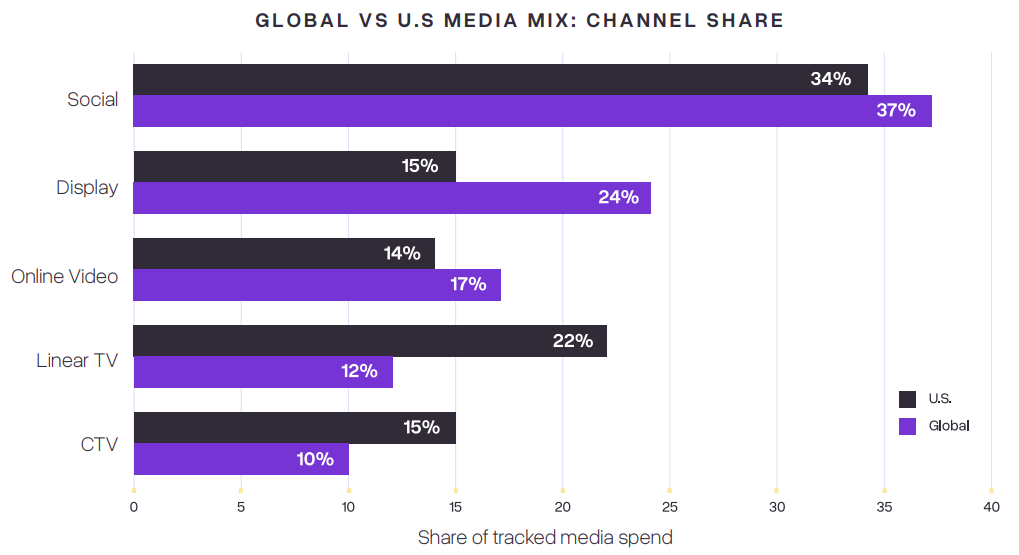
From there, the agency should explain what it would do differently. That might mean building the plan from priority markets upward, giving channels clearer journey roles, entering a competitive window earlier, or tracking market position alongside client outcomes. The point is to turn outside-in evidence into a specific agency difference, not to use the data as proof that a current approach has failed. For 2027 planning, the same logic can turn competitor investment patterns into specific market and channel budget recommendations.
Keep the Deck Smaller Than the Analysis
The full analysis may contain dozens of signals. The pitch should not. A useful format is a right-sized, modular deck, often five to eight core slides, with supporting channels, detailed tables, and additional evidence moved to an appendix or shared dashboard.
The goal is a story the client can repeat after the meeting: the competitive problem, what the agency would do differently, and the first measurable action.
Download the Pitching with Proof ebook for free for the complete 10-step framework, pitch examples, evidence-selection guidance, checklists, and modular deck workflow.