Competitive advertising reports can tell you who spent the most, where campaigns ran, and how many impressions they generated. But two brands with similar media footprints may be telling entirely different stories. One sells convenience; another emphasizes savings. The creative itself carries signals about positioning, product priorities, audience cues, and what advertisers want people to do next. Those differences are harder to compare than the numbers behind the ads.
The Missing Data Inside an Ad
Much of this information has traditionally been locked inside images, videos, and copy. Analysts could inspect selected examples, but finding consistent patterns across a category often meant manually reading, viewing, and tagging ads.
Creative metadata changes the unit of analysis. Rather than treating each ad only as an asset to view, teams can work with standardized fields describing what it communicates. AI can analyze visuals, on-screen text, and video audio to make those details easier to compare at scale.
Nine Attributes, More Precise Questions
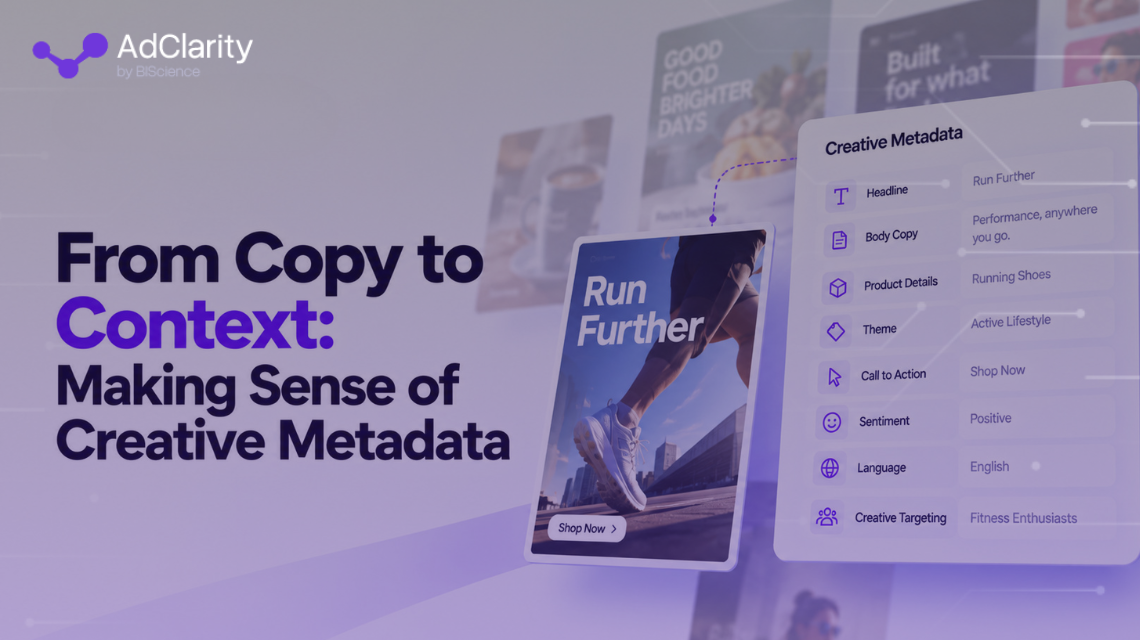
AdClarity Creative Intelligence adds nine creative-level attributes: creative summary, headlines, body copy, product details, theme, call to action (CTA), sentiment, language, and creative targeting.
The fields answer different questions. Headlines and body copy expose claims and offers. Product details show what is being promoted. Themes help identify recurring concepts, while sentiment captures emotional tone. Language supports multilingual comparisons, and CTAs indicate the next action an ad encourages.
Creative targeting describes the audience an ad appears to address, inferred from the content itself. It does not measure who actually saw the ad. That distinction is important when using creative data to interpret audience strategy.
What Can Marketers Learn at Scale?
Let’s take a category where brands begin replacing premium-positioning language with price-led offers. Comparing headlines, themes, and product details can reveal which advertisers adopt that approach first and how their messaging evolves. Similarly, shifts in CTA language can suggest whether advertisers are emphasizing awareness, consideration, or action.

For brands, these patterns can inform positioning and campaign planning. Agencies can use them in competitive audits and client recommendations. Publishers can better understand which products, promotions, and messages advertisers are prioritizing before starting a sales conversation. For 2027 budget planning, comparing these creative shifts with investment by channel can help identify which messages and media priorities merit further testing.
Connect the Message to Market Context
Creative attributes become more useful alongside the distribution data teams already track. Spend, impressions, publishers, channels, landing pages, and geography help put a claim or creative theme in context. And because the attributes are structured, analysts can filter, compare, and export them consistently instead of recreating a manual tagging system for each report.
A New Creative Data Layer
Creative Intelligence is an enhancement to the creative dataset, not a separate research module. It allows marketers to analyze what advertisers are saying, not just where their ads appear, and to uncover trends that become visible only when creative content is treated as data.
These enriched attributes are now available through the AdClarity UI, including Data Studio, and via Datafeed.